


What not to leave in your car when parking at the airport for several days
28-09-2026
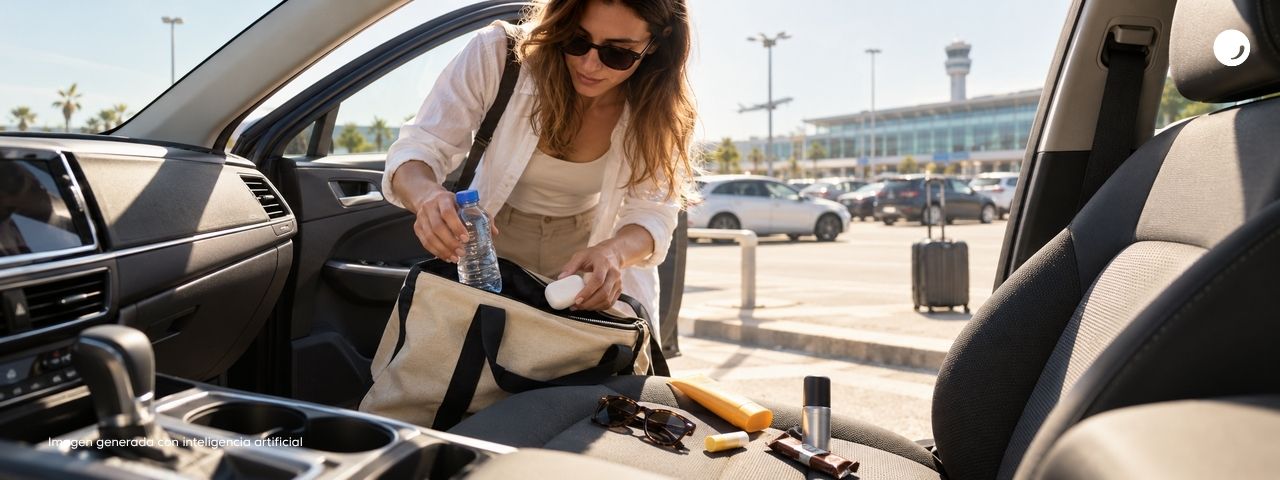
There’s a mental checklist we all run through before going on holiday: passport, ticket, phone charger, and making sure you haven’t left anything defrosting that might turn into an unpleasant surprise when you get home. What not everyone thinks to check is what’s left inside the car before leaving it parked for several days. And that’s a mistake. Not a catastrophic one, but the kind that follows you all the way to the sun lounger: somewhere between cocktails, you suddenly start wondering (with a hint of panic) whether you left that chocolate bar sitting on the car seat.
Why a car parked for several days is not a neutral environment
A closed space in direct sunlight can reach temperatures far higher than outside. According to data from Spain’s National Institute for Safety and Health at Work, the inside of a vehicle parked in the sun can exceed 70 °C in summer, even when the outdoor temperature is only 30 °C. And, obviously, that can affect certain objects. Electronics in particular. Heat is not distributed evenly throughout the cabin either: the dashboard and the area beneath the windscreen are exposed to direct radiation for hours, while the boot or the floor beneath the seats are somewhat better protected. There’s a very practical takeaway here: if something has to stay inside the car, where you leave it matters.
A car parked on a public street also comes with another risk: a visible object may attract someone looking for an opportunity. At aparca&go, however, our car parks have 24-hour surveillance and access control. So, although we always recommend removing valuables, in this article we’re going to focus on the enemy that even cameras can’t stop: heat.
Items that can be damaged or become dangerous in the heat
Power banks and electronic devices
Power banks, wireless headphones, tablets, laptops, vapes and portable speakers all contain lithium batteries. High temperatures speed up their degradation and, if a battery is damaged or exposed to extreme heat, the risk of overheating, leaking or catching fire increases.
Medicines, food and other heat-sensitive products
Most medicines should be stored at room temperature or below 25 °C. That is not compatible with the inside of a car parked in full sun in the middle of August. Heat can alter the composition of those antihistamines or vitamin supplements you forgot in the glove compartment, even if they look perfectly fine at first glance.
Food can suffer in much the same way. Emergency sweets and chewing gum, or that chocolate bar that has been waiting for its moment for months, can melt, lose their shape or fuse with the wrapper until they become an entirely new species. Drinks can also deteriorate or leave behind smells you won’t forget in a hurry. Some studies have also observed increased microplastic release into water when plastic bottles are exposed to high temperatures for long periods. If in doubt, always check the storage instructions and, when in doubt, take it with you.
Glasses, cosmetics, aerosols and items stuck to the dashboard
The sun can also take its toll on less obvious items:
- Plastic frames can warp, and coatings on some lenses can deteriorate when exposed to high temperatures.
- Cosmetics, sun creams and lip balms can change texture, separate or lose stability. In pressurised containers —such as deodorants, hairsprays or aerosol sunscreens— heat increases the internal pressure, so they should never be left exposed to the sun.
- It’s also worth removing phone holders, suction cups, adhesive accessories, plastic cards and small items resting on the dashboard. Heat can soften glue, warp components and leave behind that sticky mark that seems harmless until you try to remove it.
- And be careful with lighters: even if they’re small and forgotten in a corner, they contain flammable gas and should not remain inside a vehicle exposed to high temperatures.
An extra precaution with valuables
Although our car parks at Barajas and El Prat have 24-hour surveillance and access control, the safest recommendation is still not to leave unnecessary documents, house keys, cards, electronic devices or other valuables inside the car and in plain sight. If you don’t need them during your trip, they’re better off at home —not hidden under a jacket on the back seat.
How to reduce the effects of the sun while you’re away
The most effective measure is simple: remove anything from the car that is sensitive to heat. For anything that is part of the vehicle itself, these precautions can help limit exposure:
- Use a front windscreen sunshade: it reduces direct radiation on the dashboard, steering wheel and screens. It won’t stop the cabin from heating up, but it does protect the areas exposed to direct sunlight for hours.
- Look for a covered or protected space: aparca&go has a limited number of covered parking spaces. You can select this option during the booking process, subject to availability.
- Keep screens and accessories out of direct sunlight: leave holders, cables and devices at home. If something has to stay in the car, keep it off the dashboard and check the manufacturer’s storage recommendations first.
- Don’t rely on leaving the windows slightly open: a small gap will not prevent the inside of the car from reaching high temperatures and it adds an unnecessary security risk. For a stay of several days, it’s better to keep the car closed and heat-sensitive items out.
One last check of the cabin and boot
Think you’ve got everything under control? Sure there’s nothing in your car that could come back to haunt you? Check again. It only takes a moment:
- Glove compartment: documents, medicines, valuables, chewing gum, sweets or chocolate bars.
- Dashboard shelf: power banks, sunglasses.
- Cup holders: bottles, e-cigarettes.
- Back seats: forgotten bags, headphones, chargers, water bottles.
- Boot: food, hand luggage you decided not to check in.
- Under the seats: the technical category is: surprise.
Preparing your car properly also helps you travel with greater peace of mind
Clearing out the car before leaving it at the airport for several days is not an obsessive ritual. It’s the equivalent of checking that you locked the front door: a quick task that stops doubt from sneaking into your luggage.
Three minutes of checking before you lock up and your trip starts on a different note. Safer. Calmer. More complete. Shall we work as a team? You take care of removing anything that shouldn’t stay in the car. We’ll take care of looking after your car while you’re away. That way, when you get back, the only surprise left should be deciding who drives. Now that’s what we call a smooth trip!
Reserve your Parking

Barcelona El Prat Airport Parking
→ View parking
Madrid Barajas Airport Parking
→ View parkingShare article